
join us for
the Harvard Club of Southern Connecticut
annual Dinner and talk
Do You Want a Revolution?
Lessons from History and Theology to Shape our Future
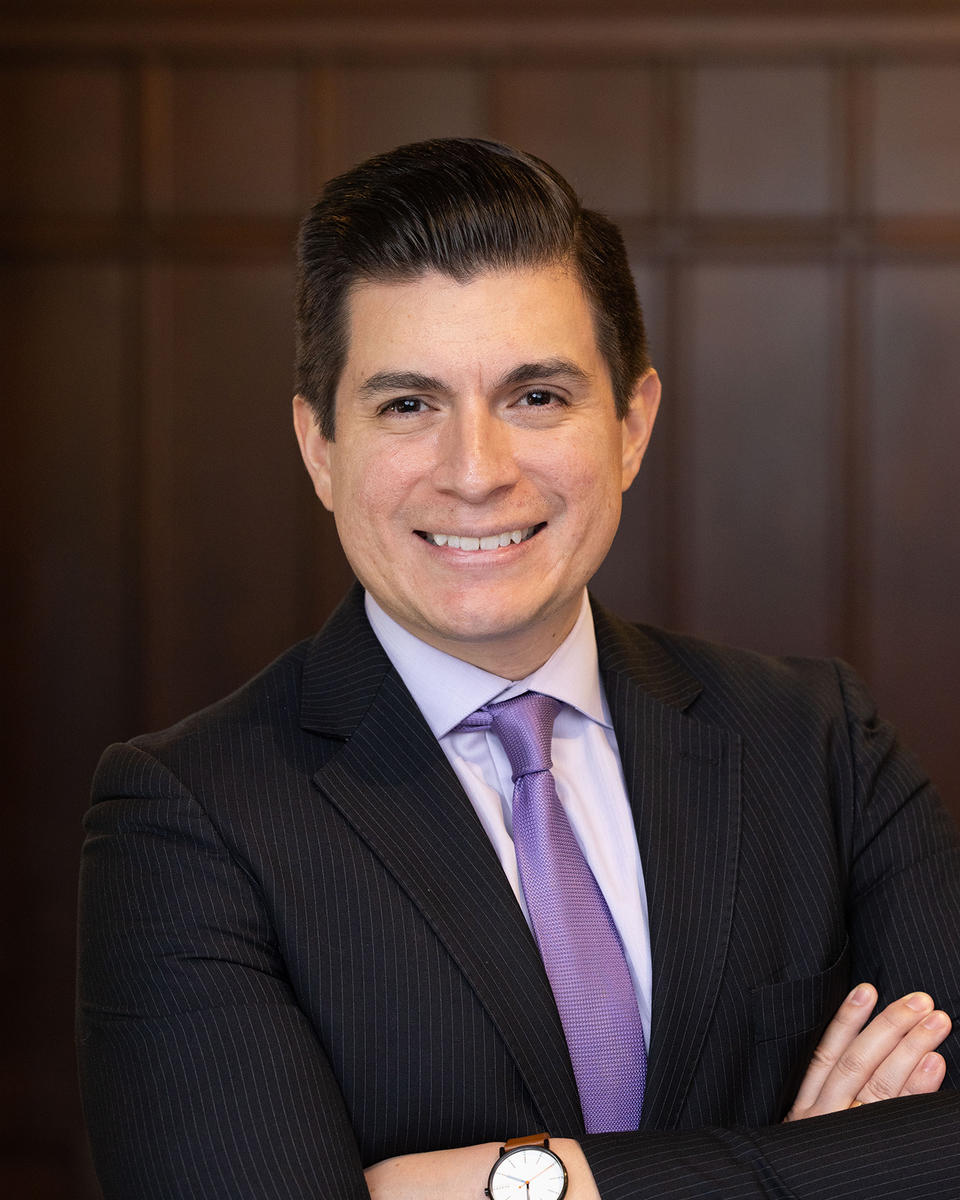
Our distinguished speaker is Dr. Raúl E. Zegarra, is a Harvard Divinity School professor whose work sits at the intersection of Catholic theology, politics, and social justice. His scholarship—shaped by Latin American thought—explores how faith can drive resistance, liberation, and ethical engagement in the modern world. Dr. Zegarra's book, A Revolutionary Faith, discusses how liberation theology can inform our approach in supporting and promoting social social justice in conjunction with, not in opposition to, one's religious beliefs.
During the event we will also welcome newly admitted class of 2030 students to our Harvard community.
Location: New Haven Lawn Club, 193 Whitney Ave, New Haven; plenty of free parking available.
Date: Tuesday, June 9, 2026
Time: 6 o'clock
Dress code: Country Club Attire
Cost: $80 per person, which includes three-course dinner and a glass of wine or soft drink. A cash bar is also available.
Please consider sponsoring an incoming Class of 2030 student attendee by purchasing an additional ticket (or tickets). We invite admitted students and a guest to attend free of charge, and your contribution helps us offset the cost. Thank you for your generosity!
Below is a summary of Dr. Zegarra's upcoming presentation.
This lecture addresses a historical and ethical problem: Is revolutionary struggle the best way to make our societies more just? Drawing from history and theology, the goal of this lecture is not to provide one single answer, but instead to show that revolutions take different shapes due to different historical constraints and ideological assumptions. Many revolutions lead to violence and endless turmoil. Some can institutionalize their ideals progressively shifting from active struggle to the development of basic structures and modes of life that create moderate stability. Ultimately, however, no revolution can fully complete its task, an issue that introduces the horizon of transcendence into the immanent struggle for a better world. The lecture is divided into three parts. In the first, I introduce a few operating definitions of revolution to establish some shared conceptual ground. In the second, I distinguish between socially oriented and politically oriented revolutions to show how the latter, by building institutions that allow the transition from struggle to moderate stability, offer some of the best paths to address the question of social justice. Lastly, I turn to theology, in conversation with Jürgen Moltmann and Gustavo Gutiérrez, to address the question of social justice by considering our finitude and its bearing on the change we can produce in the world.